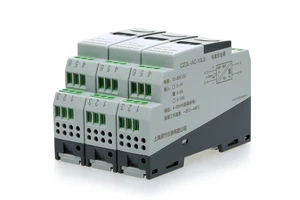
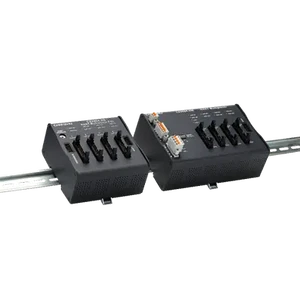
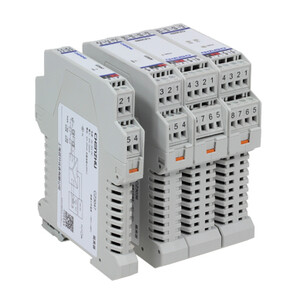
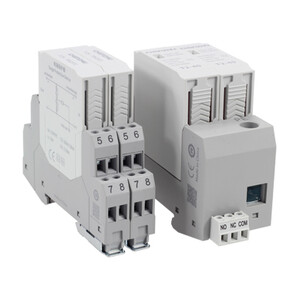
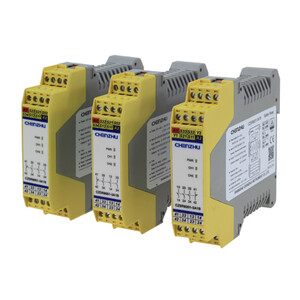
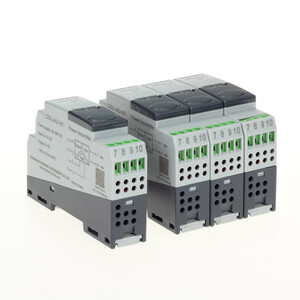
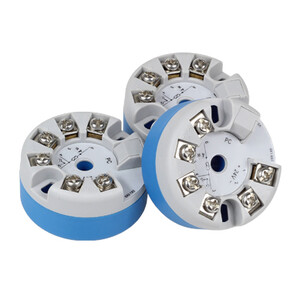
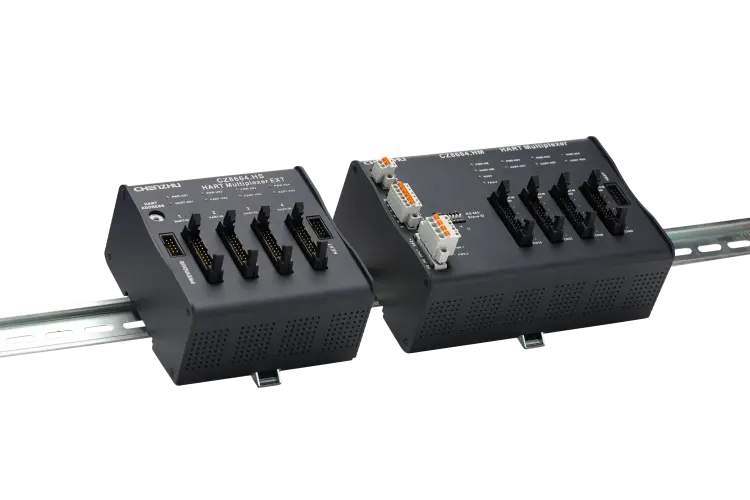
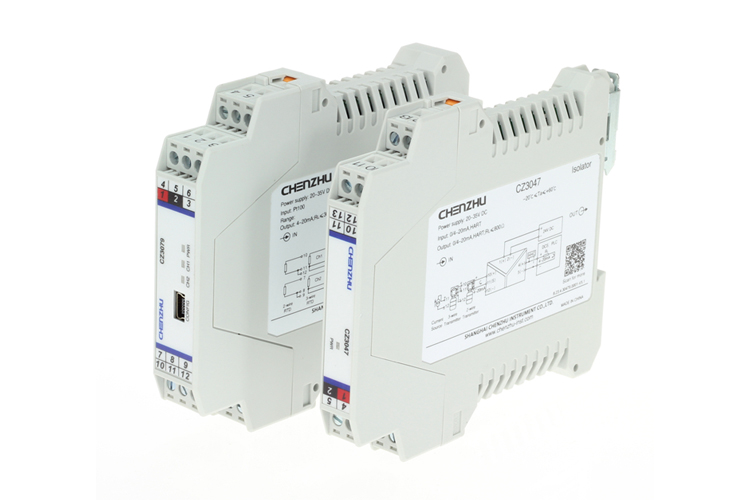
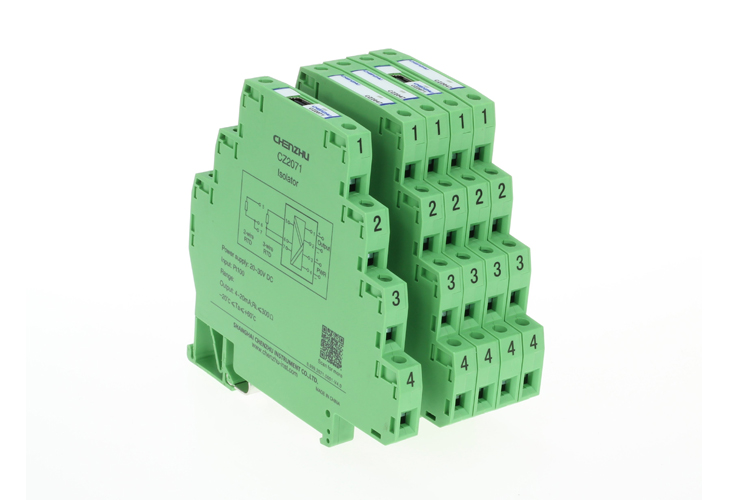
Isolator Barrier is mainly composed of a loop energy limiting unit, a signal and power isolation unit, and a signal processing unit. It not only has the function of energy limiting but also has isolation functions. Isolator Barrier basically comes in two types: detection end safety barrier and operation end safety barrier.
Using Isolator Barrier can effectively isolate the field loop signals in hazardous areas from the loop signals in safe areas. This simplifies the construction of intrinsically safe explosive-proof systems as intrinsically safe automatic control systems do not require an intrinsically safe grounding system.
Using Isolator Barrier greatly enhances the anti-interference capability of detection and control loops, improving system reliability.
Using Isolator Barrier allows field instruments to be grounded and non-isolated types of field instruments.
Isolator Barrier has many protective circuits, reducing the likelihood of accidental damage, and allows live maintenance of field instruments, shortening project start-up preparation time and reducing downtime.
Isolator Barrier has strong signal processing capabilities such as switch quantity input state control, mV, Pt100 conversion to 4~20mA, etc. This provides greater convenience, rationality, and efficiency for the application of field instruments and control systems.
When users apply DCS and ESD systems simultaneously, choosing a one-in-two-out safety barrier can effectively isolate the two systems, avoiding mutual interference.
Loop-powered Isolator Barrier retains the advantages of active Isolator Barrier with the convenience of Zener barrier wiring, without the need for an additional 24V power supply. It is especially suitable for I/O card direct power supply DCS systems.
Power indicator light off or LCD not displaying
Check if the instrument power supply is correctly and reliably connected.
Check if the power supply voltage is normal.
Check if the 24V power supply is connected in reverse polarity.
No output signal
Check if the input signal is correctly connected to the input terminal.
Check if the input signal type matches the instrument input type.
Check if the output terminal is properly tightened.
Check if the removable external terminal is properly connected.
External output loop open circuit.
Large output value deviation
Check if the thermocouple input positive and negative leads are reversed.
Check if the three-wire connection for RTD input is correct.
Check if the polarity of the output wiring is reversed.
When outputting current, check if the total external load resistance exceeds the specified ohms (4-20mA output).
When outputting voltage, check if the external load resistance is less than 500k ohms.
Low power supply voltage.
Unstable output signal
Check if the wiring is secure.
Check if the input signal is stable.
Check if the output loop wiring is reliable.
Check if there are high-power electromagnetic devices near the instrument.
 English
 한국어
한국어 français
 Deutsch
 Español
 italiano
 русский
 português
 العربية
 tiếng việt
 čeština