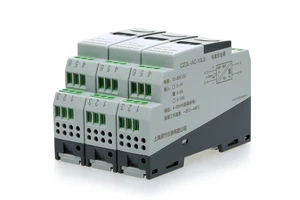
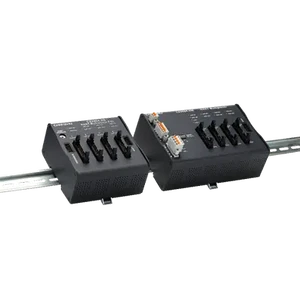
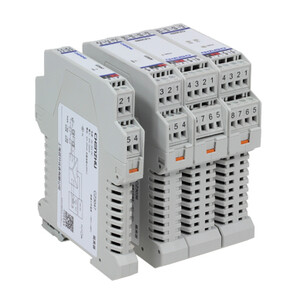
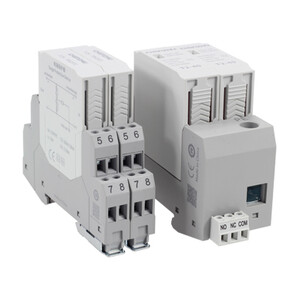
Due to the different electricity demands in various scenarios, Power SPDs have given rise to various power systems. In addition to single-phase systems, there are TT systems, TN-C systems, TN-S systems, etc. Therefore, Power SPDs have also developed different models to correspond to these power systems.
Power SPDs can be connected between L (live wire), N (neutral wire), PE (protective earth) as L-L, L-N, L-PE, N-PE, which are related to the grounding types of the power system. According to the standard definition in GB/T18802.12-2014 3.1.30, the protection modes specify how SPD protective components can be connected between L (live wire), N (neutral wire), and PE (protective earth). These connections, whether between phases, phase to neutral, phase to earth, neutral to earth, and their combinations (L-L, L-N, L-PE, N-PE) form the protection modes which protect the current path of the components being protected.
Power SPDs have three common protection modes: common mode, differential mode, and full mode. Differential mode and common mode are based on different forms of surge and transient voltage occurrences. Differential mode protectors provide asymmetric protection for the circuits of electrical equipment, while common mode protectors provide symmetric protection. Full mode Power SPDs combine differential mode and common mode to protect all modes in the circuit of electrical equipment.
Common Mode
This protection mode connects the protection module between the live wire and the protective earth (L-PE), and between the neutral wire and the protective earth (N-PE). Three-phase systems use 3~4 modules. The common mode module protects the insulation of circuits and devices within the equipment against the earth.
Differential Mode
This protection mode connects the protection module between live wires (L-L) or between live wire and neutral wire (L-N). It protects the circuit and devices between the two input terminals of the equipment. The differential mode module connected between live wires protects devices connected between live wires within the equipment.
"3+1" Mode
This consists of 3 differential mode modules between live wires and neutral wire (L-N) and one common mode module between neutral wire and protective earth (N-PE). In the "3+1" connection method, the protection of each phase to earth (L-PE) is achieved by both differential mode modules and gap modules.
Full Protection Mode
This includes both common mode and differential mode. Generally, a full protection mode requires 7 modules for three-phase systems, excluding phase-to-phase modules. The advantage of full mode Power SPDs is the protection of all possible paths of surge current.
Protection Mode | L1,L2,L3,N—PE (4P) | L1,L2,L3—N,N—PE; (3+NPE) | L,N—PE; (2p) | L—N,N—PE; (1+NPE) | L1,L2,L3—PE (3P) |
Code | A | B | C | D | E |
(Protection Mode Codes Reference Table)
A represents a Power SPD composed of four varistor modules, suitable for TN-S systems.
B represents a Power SPD composed of three varistor modules and a discharge gap module. The three varistor modules are connected between the live wires and neutral wire, while the discharge gap module is connected between the neutral wire and earth wire, suitable for TT systems.
C represents a Power SPD composed of two varistor modules, suitable for single-phase TN power systems.
D represents a Power SPD composed of one varistor module and one discharge gap module, suitable for single-phase TT power systems.
E represents a Power SPD composed of three varistor modules, with the three varistors connected between the live wires and earth wire, suitable for IT systems and TN-C systems.
 English
 한국어
한국어 français
 Deutsch
 Español
 italiano
 русский
 português
 العربية
 tiếng việt
 čeština