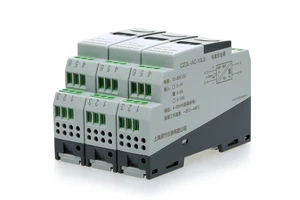
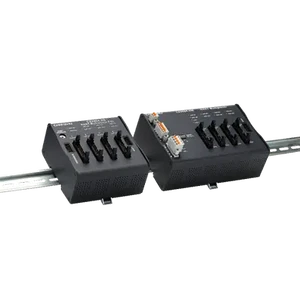
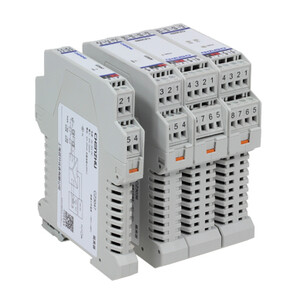
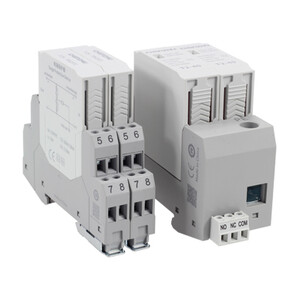
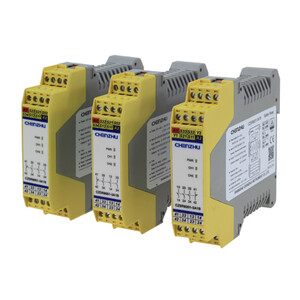
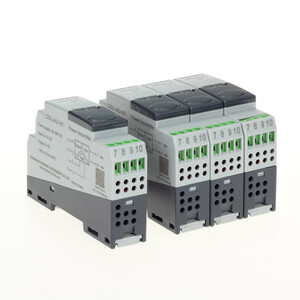
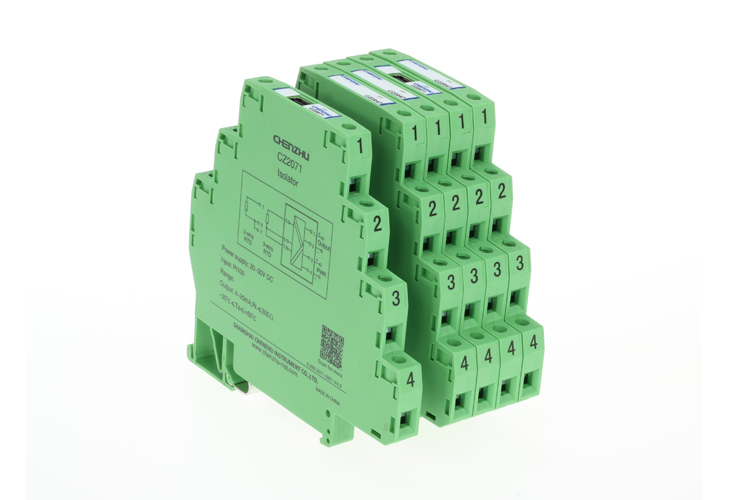
Safety Relays come in many models. Are you feeling overwhelmed about how to choose the right one?
Coil Voltage
Commonly/default DC24V. When it comes to safety relays, it is easy to associate them with safe electricity and safe voltage. We find that the vast majority of safety relays power supplies and output loads requireDC24V.
Number of Contacts
Safety Relay contacts related to safety are NO contacts. NC contacts are not related to safety (usually used for feedback or indication). Focus on whether the number of NO contacts is sufficient; if not, use a safety extension module (safety intermediary relay) to expand NO contacts. NC contacts can be expanded using ordinary relays.
Safety Function
The functions of safety relays are mainly divided into:
Automatic Start(automatic reset, door-related applications, light curtains, etc.)
Monitored Start(manual reset, falling edge, emergency stop, etc.)
Manual Reset(manual reset, rising edge, less commonly used)
Safety Applications
Emergency stop, door monitoring, light curtains, light grids, safety mats, delay (frequency converter applications), two-hand operation (stamping), etc.
The failure rate of safety relays needs to be factored into the overall system SIL verification and used as an important basis when selecting models. Additionally, compatibility with electrical connections involving upper control equipment and lower actuators should also be considered.
Inrush Current
Increasing the capacitance of the safety relay signal input port can improve EMC resistance performance, but will cause an inrush current greater than the maximum load required by the card's specifications at the moment of signal connection. SIS controller's DO card may detect this overcurrent signal and enter a fault alarm state, making it unable to operate normally. Therefore, even if the card's specifications do not explicitly state the requirements for inrush current, this indicator should still be a focus when selecting a safety relay.
Diagnostic Test Pulse Filtering
DO cards will continuously emit dynamic diagnostic test pulses to detect issues such as short circuits in the loop. At this time, safety relays should play a certain filtering role, i.e., the output should remain in the engaged (or released) state and should not respond to test pulses of specific widths. By increasing the capacitance or inductance of the safety relay port, or if the onsite wiring is too long leading to increased inductance, the diagnostic test pulse will quickly decay, causing the test pulse to be unreadable by the card and triggering the card to enter a fault alarm state.
Output Contact Switching Capacity
The switching capacity of safety relay output contacts reflects compatibility with lower-level actuators. Insufficient switching capacity can lead to contact carbonization, welding, and other faults. Therefore, the reasonable selection of switching capacity is a guarantee of its own life span and reliability. Adding suitable fuse protection in the contact loop is also a means of contact protection.
 English
 한국어
한국어 français
 Deutsch
 Español
 italiano
 русский
 português
 العربية
 tiếng việt
 čeština