Every industrial facility, whether it's a petrochemical plant, a conveyor-driven packaging line, or a municipal pumping station, runs on electricity. But simply knowing that equipment is "on" doesn't tell you much. The real question is: how is that equipment performing? Is it drawing more current than it should? Are voltage sags going undetected, slowly damaging motors and drives?
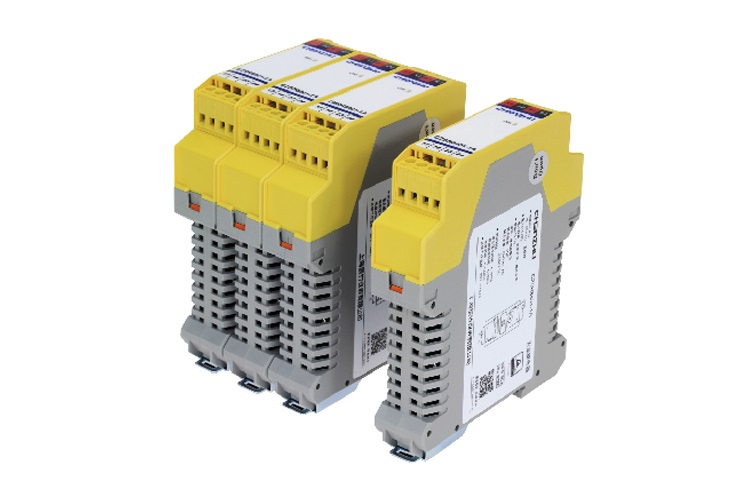
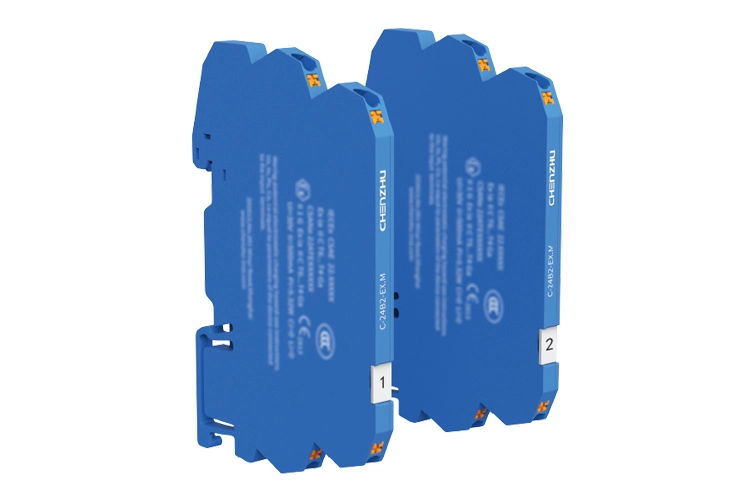
This is where power transmitters earn their place in the control cabinet. These unassuming DIN-rail-mounted devices do something deceptively simple: they convert real-world electrical parameters—voltage, current, power factor, frequency—into clean, industry-standard analog signals that PLCs, SCADA systems, and data loggers can actually use. And when that signal is accurate, everything built on top of it—energy management dashboards, predictive maintenance algorithms, process control loops—becomes more reliable.
In this article, we'll explore why the quality of your power measurement matters more than you might think, what to look for in a power transmitter for challenging electrical environments, and how the right choice can prevent problems before they reach the control room floor.
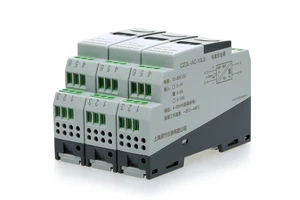
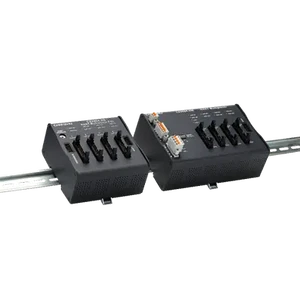
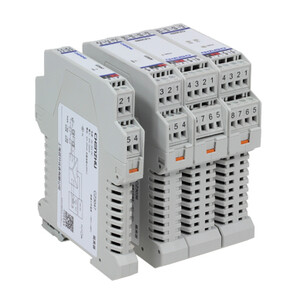
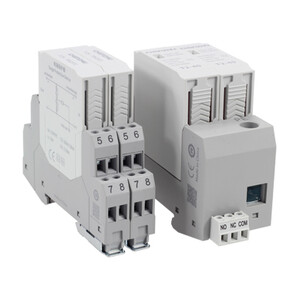
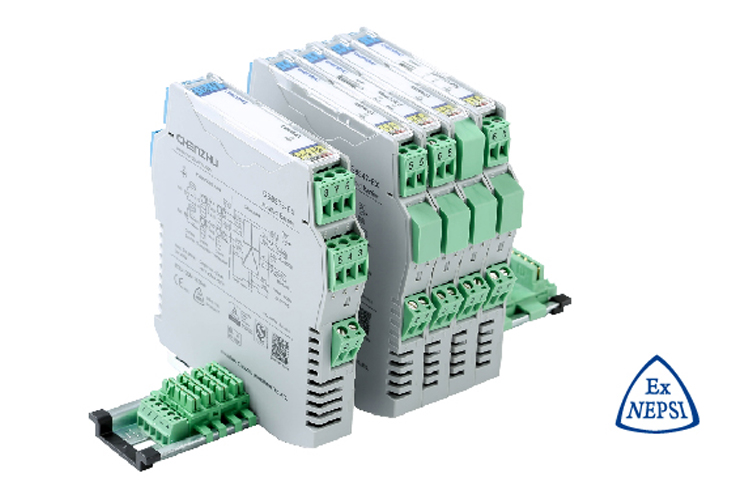
At its simplest, a power transmitter is a measurement instrument that converts electrical parameters such as AC voltage, AC current, DC voltage, DC current, reactive power, frequency, or power factor into a linear proportional DC current or voltage output. This output—typically 4–20 mA or 0–10 V DC—can be fed directly into a PLC analog input card, a SCADA remote terminal unit, or a panel meter.
Why not just wire a voltage or current signal directly? Two reasons: isolation and standardization.
First, the electrical environment inside an industrial panel is noisy. Motors start and stop, variable frequency drives generate harmonics, and ground potentials can differ between equipment located at opposite ends of a facility. Without galvanic isolation between the measurement input, the output signal, and the power supply, ground loops can introduce measurement errors—or worse, damage sensitive control equipment.
Second, standardization matters. A 4–20 mA current loop can travel hundreds of meters over twisted-pair cable without signal degradation, something a raw millivolt or voltage signal simply cannot do. This is why current-output transmitters dominate in process industries: they're immune to voltage drop over long cable runs and inherently resistant to electromagnetic interference.
One of the most overlooked considerations when selecting a power transmitter is how it handles non-sinusoidal waveforms. In an ideal world, AC voltage and current follow a perfect sine wave. In a real factory, that waveform is often distorted by switching power supplies, thyristor-controlled heaters, VFDs, and LED lighting ballasts.
A basic averaging meter or transmitter assumes a clean sine wave. When the waveform is distorted by harmonics—which is increasingly common in modern industrial facilities—that assumption falls apart. The measurement error can be significant, sometimes exceeding 20 or 30 percent under heavy harmonic conditions. The non-linear voltage-current characteristics of power electronic devices produce harmonic currents that standard measurement techniques fail to capture accurately.
True RMS detection technology addresses this problem by capturing the actual energy content of the waveform, harmonics and all. For applications like monitoring the output of a thyristor drive or measuring energy consumption on a circuit loaded with switch-mode power supplies, a true RMS power transmitter gives you the real number, not an approximation. This is particularly important when you're using that data for energy billing verification or for detecting gradual degradation in equipment performance.
What do engineers actually do with power transmitter data? Here are a few scenarios where these devices deliver practical value.
Facility managers need to know which production lines, which shifts, and which machines consume the most energy. Power transmitters installed at key distribution points enable granular energy monitoring without the cost of a full power quality meter at every location. The 4–20 mA output integrates with existing building management systems or energy monitoring platforms, allowing trends to be tracked over time and anomalies to be flagged before they become expensive problems.
On a conveyor line, a sudden increase in motor current often signals a mechanical problem—a jam, a worn bearing, or a belt that's slipping. Power transmitters can detect these changes in real time. The same principle applies to pump monitoring: by measuring the electrical power drawn by a pump motor, you can infer whether the pump is running dry, cavitating, or operating against a closed valve—all without additional flow or pressure sensors.
The concept of Industry 4.0 and predictive maintenance relies on having reliable, continuous data about equipment health. Electrical power consumption is one of the most accessible indicators of mechanical condition. By trending power data over weeks and months, maintenance teams can spot gradual increases in motor load that precede bearing failure, or detect intermittent voltage sags that stress drive components. Research into predictive maintenance models using power transmitter data has shown that machine learning techniques can estimate the current state of a power transmitter and predict its degradation over time, leading to improved maintenance planning and cost savings.
DC voltage transmitters play a critical role in monitoring solar arrays, battery storage systems, and DC-powered industrial equipment. Applications like solar monitoring and industrial automation demand precise, durable performance with strong isolation and seamless integration with systems such as Siemens PLCs and Modbus-based setups. A reliable DC voltage transmitter converts DC voltage inputs in the range of 0 to 1000V into an industry-standard signal output, with full isolation between input, output, and power supply. This isolation is essential for safety in high-voltage DC systems and for protecting downstream control equipment.
When you're evaluating power transmitters for your next project, here are the specifications that matter most in practice:
| Specification | Why It Matters |
|---|---|
| Transfer accuracy | Defines the baseline measurement error. 0.1% F.S. is typical for high-quality units. |
| Galvanic isolation | Breaks ground loops and protects equipment. Look for isolation between input, output, and power supply. |
| True RMS detection | Essential for accurate measurement on non-sinusoidal waveforms (VFDs, thyristor loads). |
| Response time | Determines how quickly the transmitter reacts to changes. 200 ms to 90% of final value is common for general monitoring. |
| DIN rail mounting | Enables compact, convenient installation in standard control cabinets. |
| Operating temperature range | Must match the installation environment. -20°C to +60°C covers most indoor industrial applications. |
Beyond specifications, consider the total cost of integration. A power transmitter with flexible input range configurability and standard output options (0–20 mA, 4–20 mA, 0–10V, 0–5V, 1–5V) reduces the need for additional signal conditioning hardware. When the input, output, and power supply are all galvanically isolated from each other, you also eliminate the troubleshooting time spent chasing ground loop problems that a simpler transducer might introduce.
Power transmitters don't make headlines in automation magazines, and they rarely get mentioned in keynote presentations about digital transformation. But every reliable energy report, every predictive maintenance alert, and every smoothly running SCADA system depends on the quality of the signal coming from the field.
Whether you're monitoring DC voltage from a solar array, measuring AC current on a pump motor, or tracking energy usage across an entire facility, the principle is the same: get the measurement right at the source, and everything downstream works better.
If you're specifying power transmitters for an upcoming project, it's worth looking closely at isolation ratings, true RMS capability, and accuracy specifications—not because the datasheet demands it, but because your process data deserves it.
 English
 한국어
한국어 français
 Deutsch
 Español
 italiano
 русский
 português
 العربية
 tiếng việt
 čeština