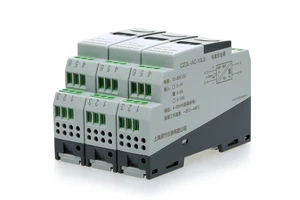
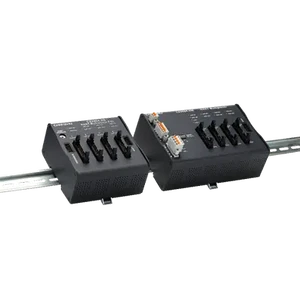
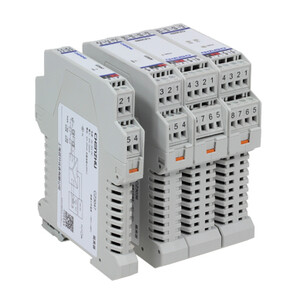
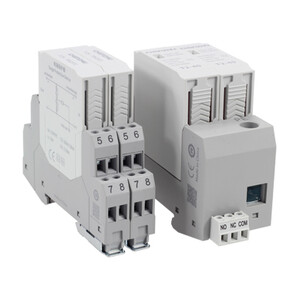
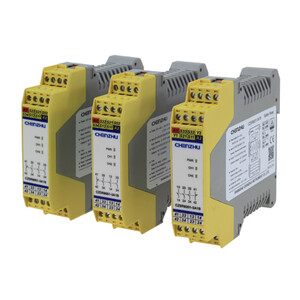
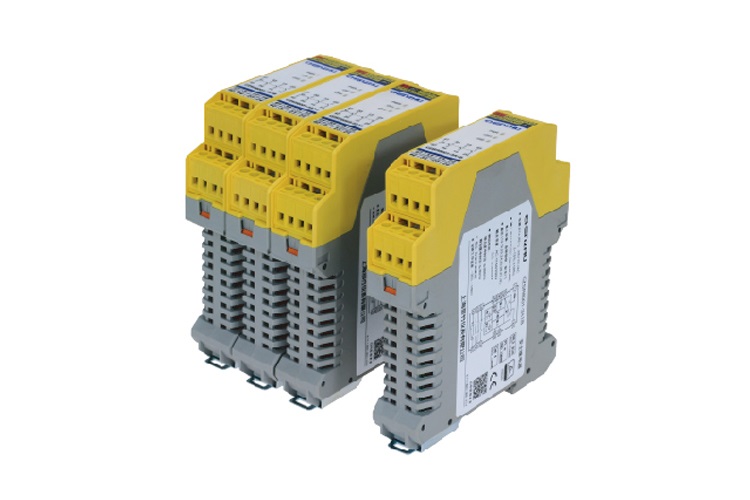
Both IEC62061 and ISO13849 in the machinery industry are function safety assessment standards specifically for the machinery industry. These are the standards used for safety relays. Why are there two different standards? The main reason is that the requirements for the safety-related parts of control systems are issued by different organizations based on different architectures and considerations.
Why do these two different standards exist? What are the differences and connections between these two standards, and which one should be used for evaluation in practical applications?
IEC62061 is a standard issued by IEC(International Electrotechnical Commission); ISO13849 is a standard issued by ISO(International Organization for Standardization).
IEC62061 is a specific standard for the machinery part in the IEC61508 standard, encompassing the entire safety chain of machinery equipment. Like IEC61508, it stipulates Safety Integrity Levels (SIL) that can be divided into 3 levels within the machinery field: SIL1, SIL2, SIL3.
ISO13849 defines the use of Performance Levels (PL) to evaluate a complete safety system or safety-related components. The performance level indicates the safety functionality a safety system can achieve under foreseeable conditions. From low to high, performance levels are classified as PLa, PLb, PLc, PLd, PLe.
ISO13849 is inherited from EN954, which focuses on analyzing the structure of safety-related components. Depending on the structure, circuits are divided into five categories: Cat.B, Cat.1, Cat.2, Cat.3, Cat.4. Additionally, parameters such as Diagnostic Coverage DC, Mean Time to Dangerous Failure (MTTFD), and Common Cause Failure CCF are used to evaluate if the corresponding Performance Level (PL) is achieved.
Furthermore, ISO13849 defines the relationship between PL and SIL. It should be noted that achieving a PL level can claim the corresponding SIL level, but the reverse is not true.
IEC62061 is mainly directed at machinery safety applications employing electrical or electronic technologies. ISO13849 does not restrict the type of technology used; it applies to electronic/electrical, hydraulic, pneumatic, and mechanical systems. Hence, in the machinery field, since the implementation methods are not limited to electronic/electrical, and also involve hydraulic and pneumatic systems, ISO13849 has a broader application scope. However, IEC62061 is more suitable for complex electronic/electrical systems, such as those involving software and programmable elements.
In practical applications, end users often do not know which standard their equipment requires for evaluation. When purchasing safety relays, they may need the product to comply with both standards. Therefore, manufacturers typically perform evaluations based on both standards, unintentionally increasing the evaluation costs.
 English
 한국어
한국어 français
 Deutsch
 Español
 italiano
 русский
 português
 العربية
 tiếng việt
 čeština