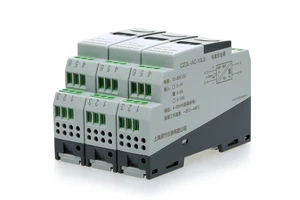
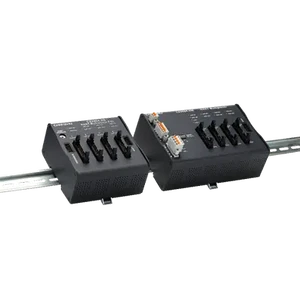
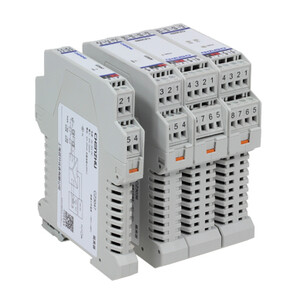
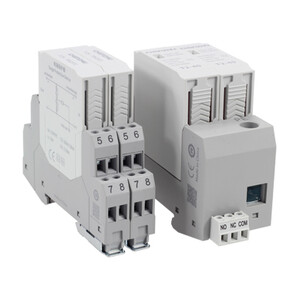
Intrinsic safety equipment has a higher explosion-proof rating compared to flameproof devices, so why can't it be used? The existence of intrinsic safety and flameproof forms of explosion-proofing represents rationality. The specific choice of explosion-proof form should be determined based on the usage environment and the intrinsic safety form of the instrument itself. Today, let's demystify and discuss intrinsic safety and flameproof!
Intrinsic safety and flameproof are different types of explosion-proof methods. Because intrinsic safety is divided into ia , ib , ic three protection levels, with corresponding EPL levels differing. For example, intrinsic safety ic is lower in protection level compared to flameproof d , while intrinsic safety ia is higher in protection level compared to flameproof d. Intrinsic safety and flameproof explosion-proof technologies each have their characteristics and advantages, suitable for different products and occasions.
Specifically, there are many explosion-proof technologies. For instrument equipment, intrinsic safety explosion-proof technology and flameproof explosion-proof technology are widely used due to their high safety and high operability.
Intrinsic safety explosion-proof technology is a "safety design" technology that suppresses ignition source energy as an explosion-proof means. It fundamentally limits ignition source energy, ensuring that even if the specified fault occurs, it will not ignite explosive substances in the explosive environment. The technology requires that electric sparks and thermal effects possibly generated during normal operation and fault conditions be less than the minimum ignition energy and autoignition temperature of explosive gases. Intrinsic safety technology is low power design technology, therefore, it has the advantages of simple structure, small size, light weight, maintenance and replacement under live conditions, high safety and reliability, and a wide range of applications.
Flameproof explosion-proof technology primarily isolates the ignition source, allowing dangerous gases to enter the flameproof enclosure, where explosions may occur. The enclosure must have sufficient strength, and the combined surfaces of the enclosure must have sufficient engagement length and sufficiently small gaps to ensure that internal explosions do not pass through the flameproof joints and cause an external explosion. It is a gap explosion-proof technology, relying on gaps and engagement length to achieve cooling and flame arresting effects.
Usually, replacement principles are that higher EPL levels can replace lower EPL levels, or same-level EPL replacements can be done, but it should be noted that different explosion-proof requirements must be met during replacement.
When handling instrument faults, it may be necessary to perform live maintenance in explosion-proof areas (maintenance generally requires live conditions, some faults can't be judged without live conditions). Intrinsic safety equipment allows live cover maintenance, and even if the cable is short-circuited, it doesn't matter, while flameproof instruments usually do not allow live cover maintenance, and live cover maintenance requires more safety measures.
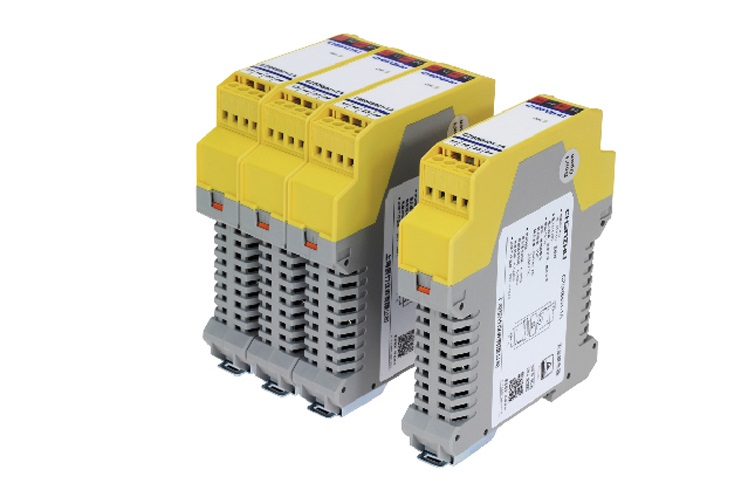
From a price perspective, for commonly used small instruments such as temperature transmitters, pressure transmitters, and valve positioners, the prices of flameproof instruments and intrinsic safety equipment are about the same, but since intrinsic safety equipment needs to add safety barriers, the overall price will be slightly higher than using flameproof instruments.
Considering maintenance convenience, safety, engineering consistency, price, and other factors, chemical plants currently prioritize choosing intrinsic safety equipment (ia level) for process plant areas, while utility plant areas usually prefer to use flameproof instruments uniformly.
 English
 한국어
한국어 français
 Deutsch
 Español
 italiano
 русский
 português
 العربية
 tiếng việt
 čeština